Beyond GEO: How AI search is reshaping digital visibility


Search behaviour is changing rapidly. As generative AI becomes embedded across search engines, assistants and digital platforms, new terms such as GEO (Generative Engine Optimisation) and AEO (Answer Engine Optimisation) have entered the marketing vocabulary.
But focusing on GEO alone risks missing the bigger shift. Today, digital visibility is no longer determined solely by where a webpage ranks in a search engine. Increasingly, organisations need to be visible across a broader ecosystem of websites, social platforms, publications, forums and other third-party sources that influence how AI systems retrieve, interpret and cite information.
Success is becoming less about optimising a single website and more about becoming a trusted, authoritative source across the wider digital landscape.
Why AI visibility is broader than SEO
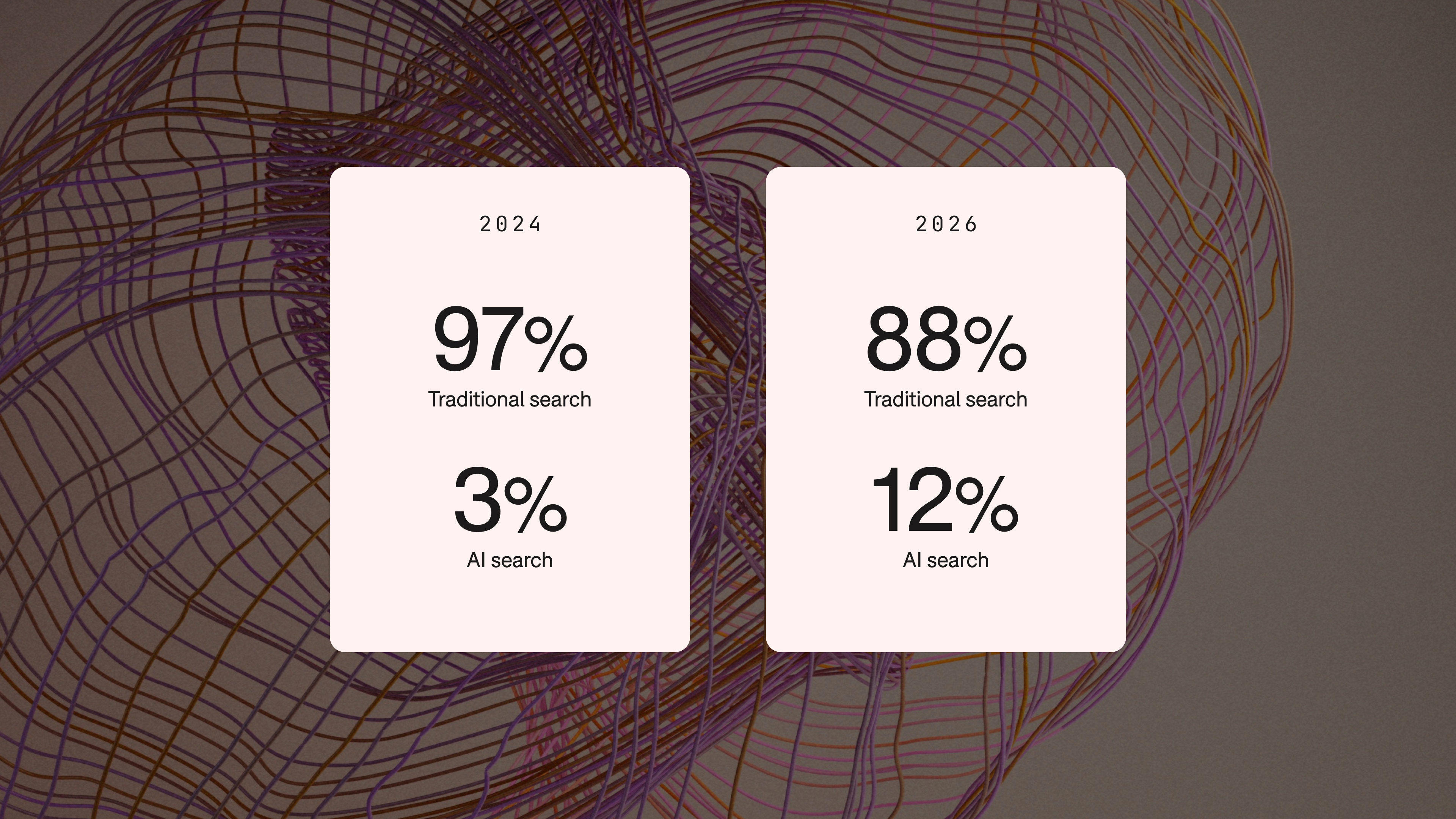
Traditional search remains the dominant way people find information online. At the same time, AI-powered search features are influencing how users interact with information. Google and Bing still account for 88% of global informational search queries, while AI-driven search experiences account for 12% in 2026. In 2024, traditional search represented 97%. (First Page Sage Google vs ChatGPT Market Share: 2026 Report).
Features such as AI-generated summaries, conversational search experiences and instant answers are reducing the need for users to click through to websites for some queries. Some 68% of Google searches ended without a click in Q2 2026, thanks to AI features, instant answers, UI elements that keep searchers in the results (Datos and SparkToro State of Search Q2 2026 report)
For organisations, this means visibility can no longer be measured solely by website traffic. The information users see before they choose to click, or decide not to click, has become increasingly important. This shift has significant implications for digital strategy.
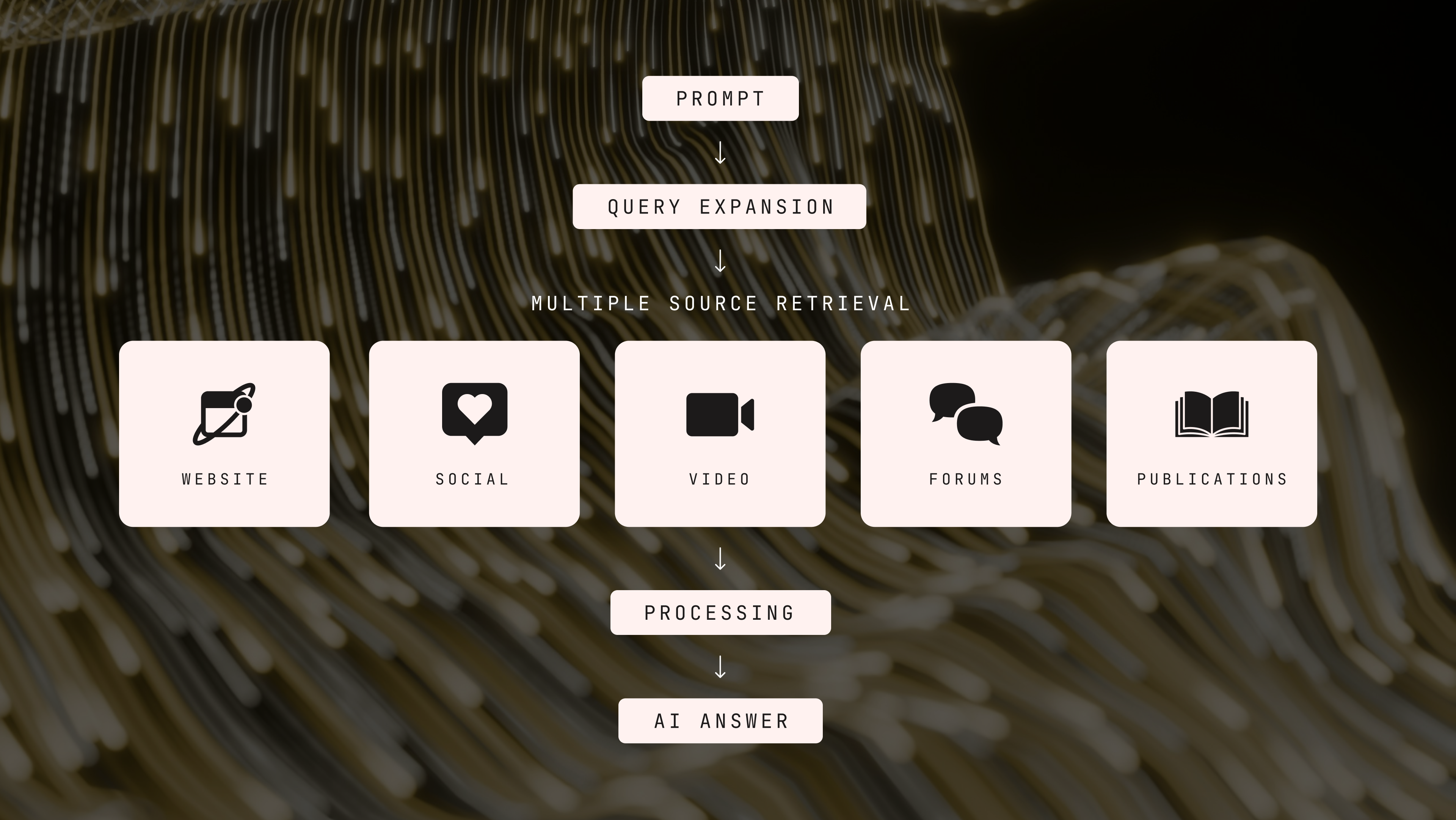
AI systems do not rely exclusively on information published on a company's website. They retrieve and corroborate information from multiple sources before generating a response. As a result, brand authority across the wider web is becoming a more important factor in digital visibility.
What influences AI visibility today?
Although the technology continues to evolve, the fundamentals remain surprisingly familiar.
Strong content foundations still matter
Many traditional SEO principles continue to play an important role. High-quality content that demonstrates genuine expertise, provides useful information and answers real user needs remains valuable regardless of whether the audience is human or machine.
Google's E-E-A-T framework, covering Experience, Expertise, Authoritativeness and Trustworthiness, remains a useful guide for content quality. Organisations should focus on creating content that:
Demonstrates original thinking and specialist expertise
Answers common audience questions clearly
Includes evidence, examples and supporting data
Provides depth rather than superficial coverage
Offers perspectives that cannot easily be replicated elsewhere
Topical authority matters more than isolated keywords
AI systems are increasingly able to understand relationships between topics, concepts and sources. Rather than producing large volumes of disconnected keyword-focused content, organisations should build comprehensive coverage around their areas of expertise. This means creating content ecosystems that include:
Thought leadership
Practical guidance
Research and commentary
FAQs and educational resources
Supporting evidence and expert opinion
The objective is to become recognised as a credible source within a specific subject area. Research from several SEO platforms has identified a correlation between wider brand visibility and inclusion within AI-generated search experiences. Research by Ahrefs found a strong correlation between sites that appear in AI Overviews and how often a brand is discussed and mentioned across the web.
Content structure is becoming increasingly important
AI systems rely on clear information architecture and semantic clarity. Content should be easy to navigate, well organised and structured around the questions users are likely to ask. Useful approaches include:
Descriptive headings and subheadings
Concise paragraphs
Question-and-answer sections
Comparison tables where appropriate
Step-by-step explanations
Supporting video content with transcripts
Long-form content can still perform well, but only when it is well structured and easy to understand.
Digital visibility extends beyond the website
One of the biggest differences between traditional SEO and AI visibility is the growing importance of third-party validation. Organisations are increasingly judged not only by what they say about themselves, but also by what others say about them. Trusted publications, trade media, industry commentary, partner websites, specialist forums and social platforms all contribute to an organisation's digital footprint. (AuthorityTech).
This reinforces the importance of maintaining accurate, consistent information wherever a brand appears online. Inconsistent descriptions, outdated information and conflicting messages make it harder for both people and AI systems to interpret and trust information.
Why digital PR is becoming more important
As AI systems gather information from multiple sources, digital PR is becoming more closely connected to visibility and discoverability. The objective is no longer simply generating coverage. It is helping to ensure that accurate, authoritative information about an organisation exists across the wider digital ecosystem. Key activities may include:
Securing coverage in credible publications
Contributing expert commentary
Supporting industry discussions
Maintaining active leadership profiles
Developing useful shareable content
Participating appropriately in community platforms and forums
The most effective organisations are likely to maintain a consistent voice and perspective across all digital channels.
Social and community platforms
Many AI systems draw upon content from social, video and community platforms when generating responses. Depending on audience and sector, platforms such as LinkedIn, YouTube, Reddit, Quora and industry-specific communities may contribute to overall visibility. However, participation should be driven by audience relevance rather than platform trends alone.
Technical foundations remain important
Technical optimisation continues to support discoverability. Recommended practices include:
Clean semantic HTML
Clear page hierarchy
Logical navigation structures
XML sitemaps and robots directives
Structured data where appropriate, with schema markup for relevant sections (news, insights, contact, profiles etc.)
Accessible content that can be easily crawled and interpreted
There has also been considerable discussion around emerging specifications such as llms.txt, MCP and other machine-readable frameworks. At present, however, there is limited public evidence that implementing these standards leads to significantly improved visibility. For most organisations, content quality, authority and accessibility remain higher priorities than experimenting with every emerging protocol.
Measuring AI visibility
One of the most significant developments over the past year has been the emergence of reporting tools designed to provide greater visibility into AI-generated search experiences.
Google Search Console
Google began introducing an AI performance report in Search Console in May. The report provides insight into how webpages appear within Google's AI-powered search features. It includes:
Impressions: how often webpages are linked or cited within AI-generated results
Top pages: which URLs appear most frequently in AI-generated answers
Origin data: impressions by country, device and date
However, the reporting remains limited. It does not currently include click-through rates, ranking positions or detailed query-level data. Although still evolving, the report provides one of the first indications of how frequently content appears within Google's AI-generated answers.
Google has also expanded Search Console reporting to include selected social media platforms. Linking Instagram, TikTok, X and YouTube accounts allows organisations to see which Google queries lead users to content across Search, Discover and Google News. This reflects the growing importance of social content in overall digital visibility and provides query-level insight into content published beyond an organisation's own website.
Google Analytics 4
Google Analytics 4 now provides greater visibility into traffic originating from AI assistants and conversational search platforms. It includes a dedicated AI Assistant acquisition channel, allowing organisations to identify traffic arriving from sources such as ChatGPT, Claude, Gemini, Copilot and Perplexity.
Bing Webmaster Tools
Bing Webmaster tools has introduced a dedicated search generative AI performance report that shows how a site’s content is used in AI‑generated answers across Microsoft Copilot and partners. The report includes:
The number of a site’s citations
The average number of cited pages per day in AI‑generated answers
The grounding queries, that is the key phrases AI engines used when retrieving content that was cited in its answer
The site’s pages cited most frequently across AI-generated answers
The site's percentage of all AI citations for a specific grounding query
But Microsoft hasn't clarified exactly which partners are included in the AI partner integrations. In addition, a growing number of specialist platforms, along with major SEO tools such as Semrush and Ahrefs now provide AI visibility tools and reports and tracking tools.
Looking beyond search: the rise of AI agents
The conversation is already moving beyond AI-powered search. Large language models are evolving from systems that answer questions into systems that can help users complete tasks. Alongside this shift, a growing ecosystem of protocols, standards and frameworks is emerging to help machines discover, verify and interact with information across the web. Initiatives such as MCP, WebMCP, Agent-to-Agent protocols, llms.txt and other machine-readable frameworks all aim to solve a similar challenge, helping autonomous systems understand content, trust sources and interact with websites more efficiently.
It remains unclear which standards will achieve widespread adoption. What is clear is the direction of travel. Organisations that maintain structured information, clear content architecture and consistent digital identities will be better positioned regardless of which technical standards ultimately prevail.
Conclusion
One year ago, GEO was often discussed as a new discipline sitting alongside SEO. Today, the more useful concept is AI visibility. Visibility is no longer determined solely by what appears on a corporate website. AI systems increasingly evaluate information from multiple sources across the wider digital ecosystem, including publications, social platforms, community discussions and third-party references.
As a result, AI visibility is becoming as much a brand authority challenge as a search optimisation challenge. The organisations most likely to succeed will not necessarily be those producing the greatest volume of content. They will be those publishing the clearest, most trusted and most consistent information about their expertise wherever their audiences and AI systems encounter it.
Want to understand how these changes could affect your digital strategy?
Get in touch to discuss how we can help strengthen your organisation's visibility and authority in an increasingly AI-mediated world.