Content is (still) king! Why quality content matters now more than ever


With every major shift in digital behaviour, questions tend to arise about how the role of the corporate website might change. From social media to mobile, and now AI-driven search, the narrative is familiar. Yet once again, reports of its demise are premature.
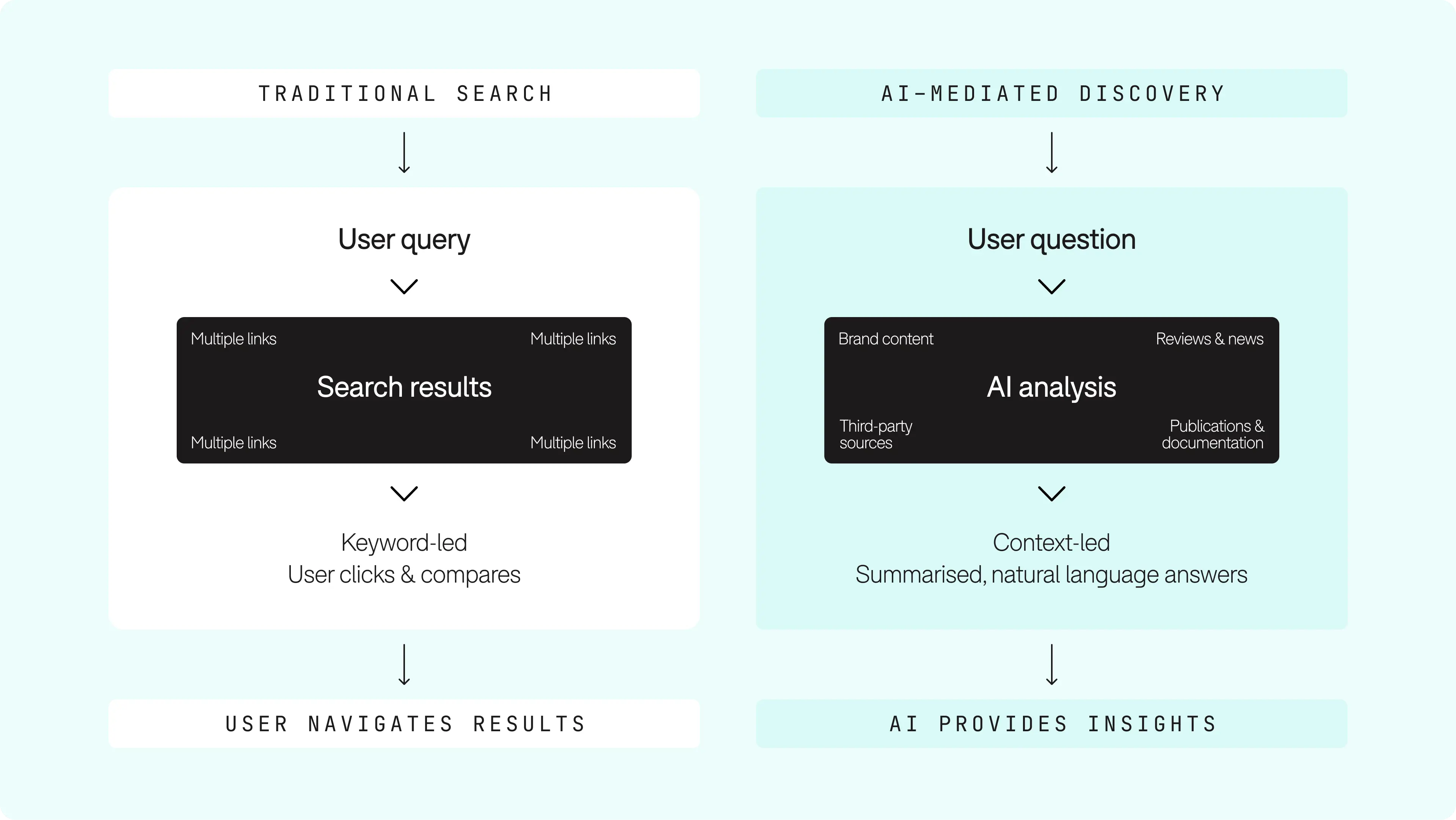
What is changing is the role content plays, and the standards it is being judged against. As search becomes increasingly mediated by AI, content is no longer simply something users find. It is something machines interpret, summarise and present on a brand's behalf. According to McKinsey, around half of consumers now intentionally use AI-powered search tools, with AI summaries already appearing in roughly half of Google searches today and expected to become the norm over the next few years.
This shift is not just technical, it is behavioural. Audiences increasingly expect clarity, context and explanation, not broadcast messaging. As Bruce Daisley has noted in his work and on the Eat Sleep Work Repeat podcast, younger generations are often labelled as disengaged or entitled, when in reality they are simply more inclined to ask why. That mindset is now pervasive across all audiences. People want content that helps them understand, not content that talks at them. It is something machines interpret, summarise and present on a brand’s behalf. That shift raises the bar. In an AI-driven world, content does not lose importance. It gains responsibility.
From SEO to GEO: a higher bar for content quality
Traditional search engine optimisation has long rewarded scale, technical hygiene and keyword discipline. Generative Engine Optimisation (GEO) builds on those foundations but introduces a new dynamic. AI-powered search engines synthesise information from multiple sources, prioritising clarity, authority, structure and relevance over sheer volume.
Recent research highlights how quickly this shift is taking hold. With around half of consumers now intentionally using AI-powered search tools, and AI summaries already appearing in roughly half of Google searches, content that is generic, thin or overly corporate simply struggles to surface. As AI-driven discovery becomes more prevalent, the emphasis shifts decisively towards clarity, authority and relevance.
The implication is clear. Organisations need fewer, better pieces of content, underpinned by strategy rather than production for production’s sake.
Audience insight and UX strategy are no longer optional
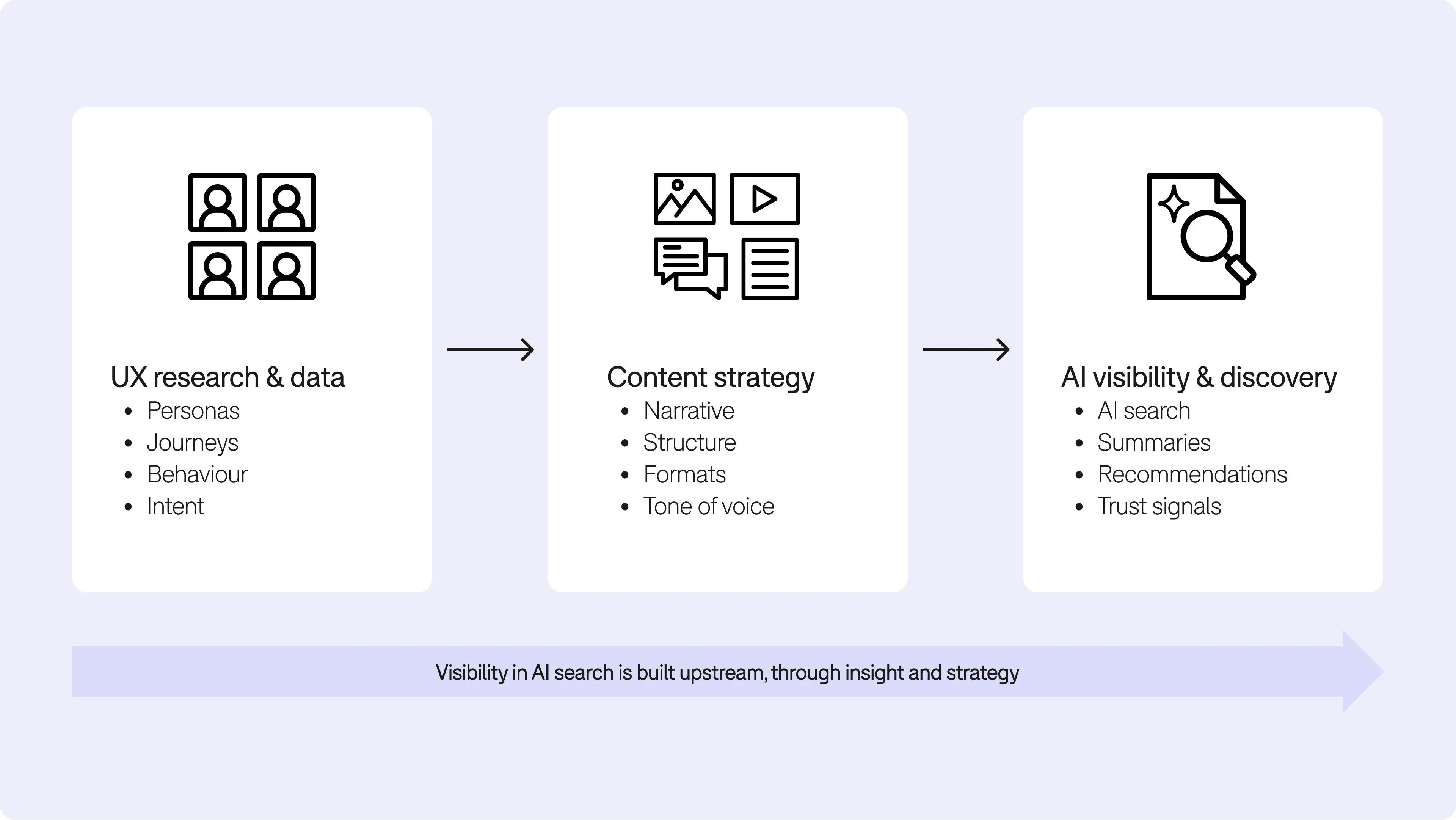
High-performing content starts long before words are written. Google’s own guidance consistently emphasises the importance of people-first content grounded in genuine expertise and understanding of user needs, rather than content created primarily to satisfy algorithms. A deep understanding of audiences, informed by data and UX research, is now fundamental to search visibility as well as user experience.
Too often, UX research, persona development and journey mapping are treated as areas to compress or remove when budgets are under pressure. That is a false economy. Without a clear view of who your audiences are, what they need, and how they behave, content becomes speculative. In an AI-mediated search environment, speculation is rarely rewarded.
Investing in research allows organisations to:
Define clear personas grounded in evidence rather than assumption,
Understand intent at different stages of the decision-making journey,
Shape content that answers real questions in a way AI systems can confidently surface.
In short, data and UX strategy are not just experience tools. They are discovery tools.
Content must work harder and in more formats
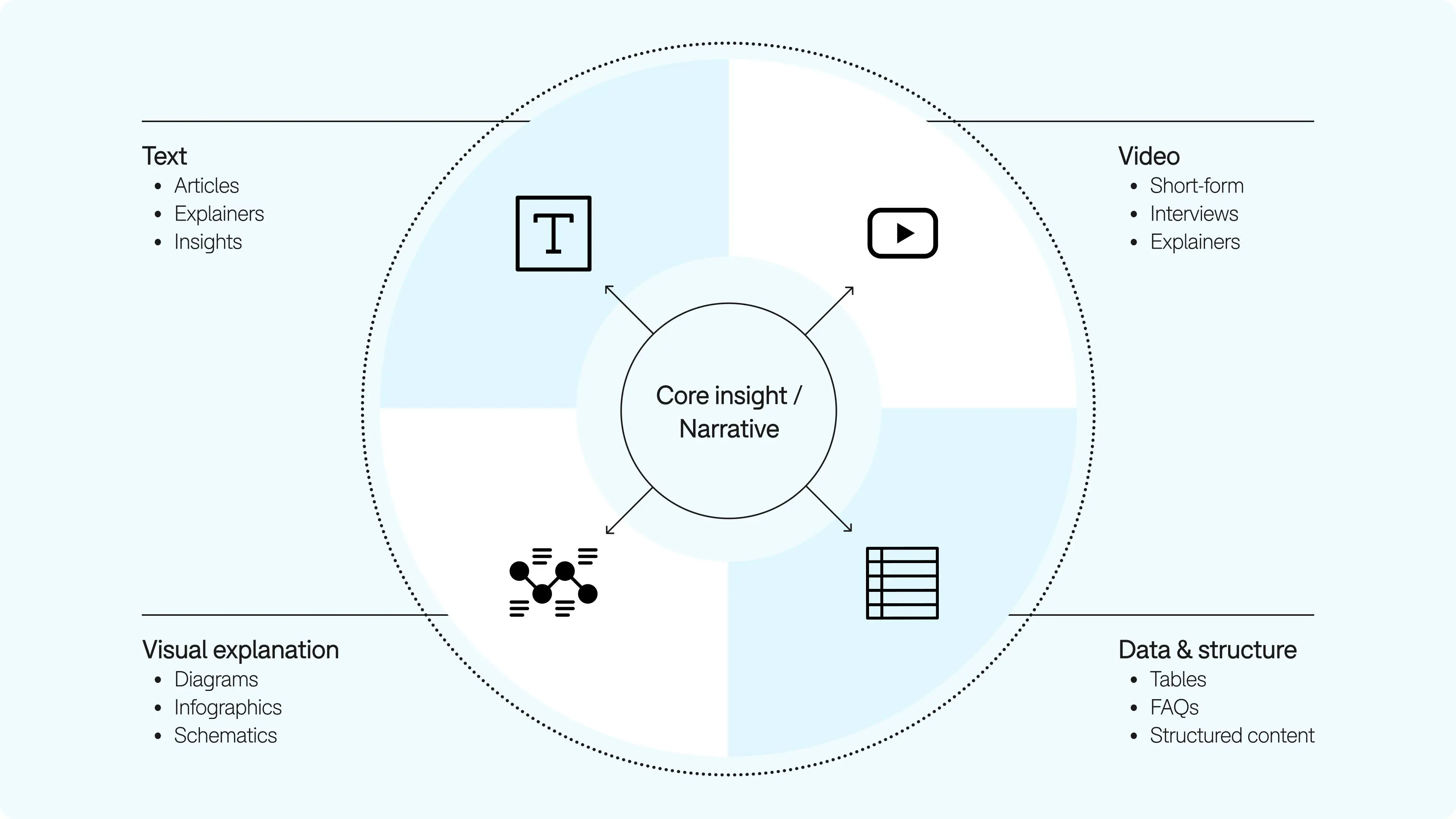
Another implication of AI-driven search is the growing importance of content beyond text alone. Google data has long shown that pages with richer media formats tend to perform better on engagement metrics such as time on page and interaction, signals that increasingly influence both SEO and AI-driven discovery. While written content remains vital, formats such as video, diagrams, infographics and data visualisation increasingly support both engagement and discoverability.
Too often, these formats are still treated as ‘nice to haves’. Many corporate websites remain heavily text-led and, where visual content is used, it is frequently lifted from printed publications, with charts and diagrams embedded as images containing dense text. This not only limits clarity and engagement, but also creates accessibility challenges and reduces how effectively both search engines and AI models can interpret the content.
Video, in particular, plays a growing role. It increases dwell time, improves comprehension and provides rich signals that both traditional search engines and AI systems can understand. Structured visual explanations and well-considered multimedia help machines interpret context, hierarchy and relevance, while also improving the experience for human users.
The most effective content strategies now think in systems rather than assets, designing content ecosystems where long-form insight, visual explanation and multimedia support each other.
Writing for how people actually ask questions
AI-powered search is conversational by nature. Google reports that search queries continue to become longer and more question-based, a pattern that accelerates when users engage directly with AI tools designed to respond in natural language. Users are no longer typing fragmented keywords. They are asking full questions, adding context, constraints and nuance.
This changes how content should be written. Natural, context-driven language that mirrors how people think and speak performs better than rigid corporate phrasing. Clear headings, direct answers and plain language help AI models interpret meaning and intent, while also improving accessibility for human readers.
The goal is not to oversimplify complex subjects, but to explain them clearly, confidently and without unnecessary friction.
Personalisation without unnecessary complexity
Alongside audience understanding comes the opportunity to personalise content experiences. This does not require heavy-handed systems or over-engineered solutions. Even light-touch personalisation, informed by behaviour, referral source or intent, can significantly improve relevance.
As AI search reduces randomness in discovery, relevance at the point of engagement becomes even more important. Tailoring content pathways while keeping experiences simple will become an increasingly valuable differentiator in B2B environments.
In an AI-driven world, content does not lose importance. It gains responsibility.
Brand voice matters more in a language-led world
As search becomes more linguistic, brand tone of voice takes on new importance. When AI platforms summarise or quote content, they inherit the clarity, confidence and consistency of the original language, making tone of voice a practical consideration rather than a purely creative one. AI systems do not just surface facts. They reflect the clarity, confidence and consistency of the language they draw from.
In crowded markets, a well-defined brand voice helps content stand out, build trust and convey authority. It also ensures that when AI platforms summarise or quote content, they do so in a way that accurately represents the brand. Brand, content and search are no longer separate disciplines. They are deeply interconnected.
Websites are not disappearing, they are becoming infrastructure
There is growing discussion around a future where interfaces matter less and content is delivered directly through AI platforms and devices. While that future may evolve, corporate websites remain critical.
Even when users do not actively visit a site, the technical quality of its build, the structure of its content and the authority of its information underpin how AI models discover, assess and present responses. Websites are becoming systems of record for AI-driven discovery, not just destinations for human visitors.
The end of ‘vanilla’ B2B content
For too long, many corporate websites have relied on recycled material from reports, policies and publications, often edited into a one-size-fits-all format. In an AI-driven environment, this approach is no longer sufficient.
Like B2C audiences, B2B audiences are human. They expect clarity, relevance and value for their time. Content that is thoughtful, well-crafted and genuinely useful performs better for users and for AI systems alike.
Conclusion: strategy, UX, brand and content are inseparable
In the age of AI search, content success is no longer about isolated tactics. It is the outcome of joined-up thinking across digital strategy, UX research, brand and content creation.
Organisations that invest in understanding their audiences, defining their voice and building high-quality, varied content on strong technical foundations will be best placed to remain visible, credible and relevant. Content is still king, but only when it is created with intent, insight and purpose.
Want to explore how this translates into practice?
Read more about how we help organisations shape content strategy, design and campaigns.